| category | factcheck |
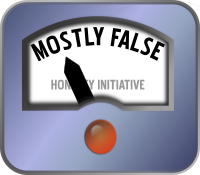
| score | Mostly False 🟥🟥🟥🟥🟧 |
| claim | "E-cigarette healthcare costs over $2000 per ex-smoker" |
| url | https://doi.org/10.1136/tobaccocontrol-2021-057058 |
| author | BMJ Publishing Group Ltd / Yingning Wang |
| tags | ['third-party-fact-check', 'linguistic-analysis', 'EVALI', 'regulatory-misdeclaration', 'correlation-causality', 'undisclosed-coi'] |
 ## Excess costs of for-profit healthcare ecosystem must be attributable to e-cigarettes
[UCSF🟥](wiki/pr-studies) paper projects additional health costs from exclusive e-cigarettes use at $2000.
It relies on sidelining the previous smoking history, and subfuscating the calculation
priors. The study was contracted by the FDA, which is currently in the process of
rejecting non-Big-Tobacco and non-smoking-relapse-flavored vaping products. Naturally
a press release embargo was used to avert the usual academic review manners; blatant
conflicts of interest found no mention, yet teared-into papers did (obligatory [Glantz](/wiki/Glantz),
who coincidentally also engineered the grant).
Not gonna do a full review here, as it doesn't appear to be a classic PR study.
It was largely just crosspolinated [<1>](https://12ft.io/proxy?q=https://www.ketv.com/article/study-vaping-costs-per-year/40082883)
[<2>](https://www.sfgate.com/news/article/New-study-finds-costs-of-vaping-exceeds-2-000-17193509.php)
among syndicated cable outlets. Unlikely to sway the public at large (already pretty
smothered with trivia exaggerations); nor will this add significantly to smokers
being deterred from quit attempts.
#### references
*
## Excess costs of for-profit healthcare ecosystem must be attributable to e-cigarettes
[UCSF🟥](wiki/pr-studies) paper projects additional health costs from exclusive e-cigarettes use at $2000.
It relies on sidelining the previous smoking history, and subfuscating the calculation
priors. The study was contracted by the FDA, which is currently in the process of
rejecting non-Big-Tobacco and non-smoking-relapse-flavored vaping products. Naturally
a press release embargo was used to avert the usual academic review manners; blatant
conflicts of interest found no mention, yet teared-into papers did (obligatory [Glantz](/wiki/Glantz),
who coincidentally also engineered the grant).
Not gonna do a full review here, as it doesn't appear to be a classic PR study.
It was largely just crosspolinated [<1>](https://12ft.io/proxy?q=https://www.ketv.com/article/study-vaping-costs-per-year/40082883)
[<2>](https://www.sfgate.com/news/article/New-study-finds-costs-of-vaping-exceeds-2-000-17193509.php)
among syndicated cable outlets. Unlikely to sway the public at large (already pretty
smothered with trivia exaggerations); nor will this add significantly to smokers
being deterred from quit attempts.
#### references
*
attempts at adjustment
and
This is like claiming that the extra health expenditure incurred by people with broken legs is caused by using crutches.
*
Failing to control for past smoking is a common flaw in studies which try to make vaping look like a major health threat.
* [ACSH: Study Raises Questions About Anti-Vaping Bias At FDA](https://www.acsh.org/news/2022/05/27/study-raises-questions-about-anti-vaping-bias-fda-16331)
To sum things up thus far, the FDA funds questionable vaping research, which it uses to inform heavy-handed e-cigarette restrictions.
* [New Reddit Journal of Science](https://old.reddit.com/r/science/comments/uxll6e/use_of_electronic_cigarettes_costs_the_united/)
* Diabetic patients taking insulin have higher health care costs than never-users of insulin. But it’s highly disingenuous to argue that the insulin is causing the diabetic complications (retinopathy, loss of limbs, etc.) and associated costs.
* Are articles like this made to build a narrative for forced regulation?
* 15 bil ÷ ~300 mil isn't even close to $2,000 per person? It is around $45-50
* NIH/FDA grant:
* No pubpeer comments yet:
* "Embargoed news":
#### calculation selectives
The final calculation, of $2024 for ex-smokers now using e-cigarettes exclusively,
actually doesn't seem too farfetched. And probably reproducible from the amassed
NHIS data. Which doesn't seem too high; given the US healthcare ecosystem quite benign
even. The FDA is probably more interested in the total $1.3 or $15.1 billion numbers
to rationalize the PMTA clownshow.
Naturally it relies on misrepresenting the previous smoking history. People using
e-cigarettes have often given up on other quitting aids, and not uncommonly
already experienced health impacts from decades-long cumbustible use. The paper
makes quite a few attempts at obfuscating it. Extrapolating from 0.2% prevalence
(an unlikely quota to begin with) seems ventured. Interestingly the comparison
to the $61.6 billion costs attributed to current smokers falls short. Given
their interpretative approach, the PR could have pointed out the $40 billion
loss in healthcare profits due to smokers becoming ex-smokers.
Not gonna delve deeper into this. Because hey, if the authors had welcomed
a full review, they could have not averted the usual review processes.
* [ACSH: The Cost Of E-Cigarettes](https://www.acsh.org/news/2022/05/27/cost-e-cigarettes-16332)
gives a rundown of the interpolation on a small sample size and
misrepresenting discrepancies to the actual default cost of continued
smoking.
#### phrase check
Only been skimming the paper twice or so:
|2016 US Surgeon General’s report compre- hensively reviewed the public health risks of e-cigarette use among youth and young adults
|🟫|Obligatory off-topic concern|
|growing literature examining the negative health impacts of e-cigarette use
|🟫|focal nurturing even|
|Given that many adult current e-cigarette users have also used other tobacco products,
|🟨|Hints of differentiation, soon to be forgotten…|
|an ‘excess utilisation’ approach
|🟩|Starts with the right model|
|key independent variable was e-cigarette use
|🟧|Discount smoking history|
|current dual/poly e-cigarette use, other tobacco use
|🟫|Regulatory misdecl|
|CPD was the number of cigarettes smoked per day for daily current cigarette smokers
|🟧|Awareness of smoking exists|
|If the respondent was not a current smoker, CPD was coded as zero.
|🟦|This might be how the reattribution was modelled in??|
|‘How long has it been since you quit smoking cigarettes’
|🟩|Quite significant covariable, unclear as to weighting|
|model assumed that e-cigarette use has impacts on healthcare utilisation through health effects, that is, e-cigarette use causes poorer health,
|🟥|Correlation != causation|
|For example, e-cigarette users might use fewer healthcare services
|🟩|Actually enumerating quite a few contextulizations|
|The sum of the total attributable expenditures for both current exclusive and dual/poly e-cigarette users is the 2018 total healthcare expenditures attributable to all current e-cigarette use. Dividing 2018 total attributable expenditures by the number of e-cigarette users in 2018 provides per-user attributable expenditures.
|🟧|This might be where it jumps the shark|
|healthcare expenditures attributable to e-cigarette use
|🟫|Attribution-desire, not attributability|
|recent estimate of per-smoker healthcare expenditures calculated from Xu and colleagues’ estimate.[20]
|🟧|15 years isn't recent|
|attributable to adult cigarette smoking (current and former smoking) amounted to $167.5 billion in 2010 including $61.6 billion from current smokers
|🟨|Again, awareness of antecedent relations|
|the per-user healthcare expenditures were $1796 for current exclusive e-cigarette users in 2018.
|🟦|Now I'm curios where the 2024 came from|
|results suggest that using e-cigarettes exclusively has substantial impacts on healthcare utilisation and expenditures.
|🟥|No, this still suggests obliviousness that e-cigs aren't substitutes for never-smoking|
|happened in the 2019 outbreak of vaping-related lung injuries
|🟥|Of course. In 2022 still.|
|Fifth, we did not include former e-cigarette use
|🟦|Explained with sourcing issues, not relativizing the attribution|
|From press interviews: "surprised that the health care costs are already as large as they are," but warned that they would only continue to grow.
||Gleeful hope for more harms. US tobacco coadjutants probably wouldn't be as worked up about vaping, if the risks were actually equal to those of smoking.|
|Competing interests: None declared.
|🟪|Sums up the paper quite well|
|REFERENCES 1 Initiative T. E-Cigarettes: facts, STATs and regulations, 2020.
|🟠|T!|
|6 Bhatta DN, Glantz SA. Association of e-cigarette use with respiratory disease
|🟥|^^|
#### author response
Did send the corresponing author an email. No reply. In retrospect, asking for
potential COI self-evaluation wasn't overly courteous, TBH.
#### verdict
Nothing wrong with assessment papers, even if was just a numb causality
chain. Obviously "how can things be improved?" studies have more practical
value. But it's kinda obvious what this paper was construed for. Judging
on the meta attributes (COI), it warrants a "False"; but for lack of
calculation review leaving it at Mostly here.
#### Other potential issues in article
* [EVALI](/wiki/EVALI)
* [ergo-harmful](/wiki/ergo-harmful)