| category | factcheck |
| score | Mostly False 🟥🟥🟥🟥🟧 |
| claim | "More banning will achieve a nicotine-free society" |
| url | https://www.theguardian.com/australia-news/2022/jun/25/teens-and-vaping-we-would-have-had-a-nicotine-free-generation |
| author | The Guardian / Bianca Nogrady |
| tags | ['third-party-fact-check', 'popcorn-news', 'ergo-harmful', 'nicotine-addiction', 'gateway-hypothesis', 'vaping-epidemic', 'not-quitting'] |
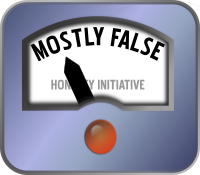 ## Hysteria sustainment will solve black markets
This is a somewhat unsophisticated article, hamstrung by evidently
narrow sourcing. It employs the usual argument ad nauseam alerts,
but adds an anecdotal component to divert from realistic causes.
Author seems quite proud of the gateway drug hypothesis to surrogate
for the desired e-cigarette deadliness.
Overall "nicotine-free generation" hints at hubris and disbelief
that vaping has contributed to smoking decline amongst teens as well.
Those are carefully omitted from the (else-wise valid) concerns about
VSNS adolescents. Some care has been taken to allude the intended
use case (to quit smoking) as mere marketing ploy. That this very
acknowledgement could reduce teen experimentation wasn't newsworthy.
#### Ben* garners a minor speaking role, not much curiosity
The protagonist of this news article makes an interesting plot device,
and [he] introduces some well-known phrases on the topic:
*
## Hysteria sustainment will solve black markets
This is a somewhat unsophisticated article, hamstrung by evidently
narrow sourcing. It employs the usual argument ad nauseam alerts,
but adds an anecdotal component to divert from realistic causes.
Author seems quite proud of the gateway drug hypothesis to surrogate
for the desired e-cigarette deadliness.
Overall "nicotine-free generation" hints at hubris and disbelief
that vaping has contributed to smoking decline amongst teens as well.
Those are carefully omitted from the (else-wise valid) concerns about
VSNS adolescents. Some care has been taken to allude the intended
use case (to quit smoking) as mere marketing ploy. That this very
acknowledgement could reduce teen experimentation wasn't newsworthy.
#### Ben* garners a minor speaking role, not much curiosity
The protagonist of this news article makes an interesting plot device,
and [he] introduces some well-known phrases on the topic:
* despite being illegal to sell in Australia
- This could have
been the crux of the article, on how illegality doesn't reduce access
all that much. Nor how sustaining talking points and black markets
might alleviate any of it. Though makes note of non-compliant shops.
* He knows about “popcorn lung”
- Article doesn't mention how the
Ben came across thoroughly debunked misinfo, or how it validates other
worries in his opinion. Because notably the news author didn't question
nor elucidate on this fairly habitual proclamation.
* But still Ben can’t stop vaping.
- Would have been apt canvassing
on the habit rather than aiming for the crack nicotine meme.
* nicotine-free generation
has a particular uncanny reminiscence
to talking points not commonly seen by 17yo's.
* If they were just fully banned,
laying the groundwork for double
prohibition; whatever that is.
#### Crack nicotine
It's an adage from the 80s and of course used to embellish addiction risks
alongside harms. But portraying nicotine as the most addictive substance
on the planet is effectively a [tobacco trivialization](/wiki/nicotine-addiction).
In this article it's primarily employed to draw an analogy to smoking, and
some appeal to spite (lucrative long-term business). It's not clear if based
on intentional obliviousness to usage patters (predominant <p20d doesn't
indicate much dependency, hence anecdotes).
The very deep into the lungs
is kinda interesting, but unsubstantiated.
It's not clear what the necessity was, since high-nic vapes already amplify
absorption and nicotine/dopamine decay and thus any dependency profile.
And would indeed be a warranted concern, since those are primary driver of
illicit sales. It's a classic war on drugs outcome; more potent substitutes
are an intractable reaction. Obviously also relies on extrapolating PR studies
and cohort-level use fluidity as population-level gateway drug for teens.
Only plausible part of the article is nicotine intoxication (stomach pains,
headaches). Realistic worries, if clearly from scattered cases.
#### Teens thrown under the bus
Topically the article is all about the dangers of vaping to youths.
Ignoring adolescent smokers of course. But even the ones worth worrying
about just serve as pretext to validate the current state of affairs.
There's a semantic misunderstanding out of perceiving "bans" as
"banishment". And how the current sales to minors wasn't an accident.
Which is why the recurring insinuation all vapes were tobacco industry
products is a rather basic deflection.
No reasonable person would assume that illicit sales protect anyone. The
peculiar demographic in tobacco control however does, or claims to. In
Australia, the restraints on adult vape shops and the failed prescription
model had predictable outcomes. Apart from a megaliter of nic concentrates
now in freezers, imported garbage vapes are now prevalent in the most
random variety stores. Without much testing, warning or sales enforcement.
Maurice voicing a sudden interest for policing is a little mistimed.
And what it looks like is sacrificing teens just to spite adults and
preventing smoking cessation.
#### Don't mention real diversion strategies
Bubblegum is more prevalent in marketable scare stories than in teen mouths.
Cause they're not actually toddlers. It goes without mentioning, but the
article makes no mention of nicotine concentrations (despite addiction being
the outward main topic), which would be essential to undo the proliferation
of illicit sales, or risks thereof.
The author was mildly cognizant that teen use is in parts out of gadget
appeal. Which is fairly trivial to avert. But would require a factual
statement, which tobacco control won't have (orthogonal to their relentless
love for popcorn, evali, and other brain-damaged claims). AU is refusing
to acknowledge that e-cigs help with smoking abstinence and quitting.
Yet play obtuse that this very information would allow for communicative
medicalization / purpose disclosure, and make a much more rational or
educative package warning even. (Again, adolescents aren't brain-dead.)
So Bianca, perhaps raise that question next time with Banks.
### references
This is more for the article author.
* [The war against youth vaping: a message for Australian authorities](https://colinmendelsohn.com.au/youth-vaping/)
* [Flawed report on vaping will harm public health](https://colinmendelsohn.com.au/anu-report/)
* [Youth vaping. The other side of the story](https://colinmendelsohn.com.au/youth-vaping-the-other-side-of-the-story/)
### notes roundup
Just some quotes to avoid going through the whole gish gallop.
|article text|sc|note|
|------------|--|----|
|It was pink, and it was bubblegum-flavoured … and it was the nicotine-equivalent of nine packets of cigarettes.
|🟥|I'm happy Ems finally settled on 9, after alternating between 2 in her report and 13 in other radio shows.|
|calling a public health crisis of its own
|🟪|A propaganda campaign one might even say.|
|some schools estimate 20%-60% of students are vaping.
|🟧|Differentiation woes between presence and preterite is also a wider concern in education.|
|only 18% had ever smoked a cigarette.
|🟨|Oh no, we are ware of past tense after all.|
|claim e-cigarettes are a harm-reduction solution
|🟫|No reputable scientist calls the reduced harm into question. It's just Simon.|
|many studies also suggest that vaping is a gateway
|🟪|Usually misrepresent cohort-observation (actually from predisposition to smoke, where vaping just precedes, not predicts, attempts). Linguistically recycled into vaping would triple smoking rates.|
|“Where’s the compliance, where are the inspectors of the respective tobacco control teams in the state governments?” he says. “Why aren’t they doing that job?”
|🟩|Yes, Maurice, too little too late. It's almost like one shouldn't have sent authorities and public discourse onto goose chases.|
|requires a total ban on all tobacco advertising and promotion
|🟧|Imagine the feasibility if there were legitimate vendors and distributors, instead of what Australia has.|
|The majority are manufactured in China,
|🟩|Devices, yes. The liquids need not be, and would be worth regulating.|
|There’s enough evidence for organisations such as the American Heart Association
|🟥|They're absolute clairvoyants on this topic (heart attacks 10 years prior use?)|
### verdict
So, there are some attempts at painting a picture. And it's not all lies.
Overwhelmingly it appears a PR article, for its overlap with depictions
by the same folks that created the current situation.
#### Robotic phrases detected in article
* [popcorn-news](/wiki/popcorn-news)
* [nicotine-addiction](/wiki/nicotine-addiction)
* [vaping-epidemic](/wiki/vaping-epidemic)